

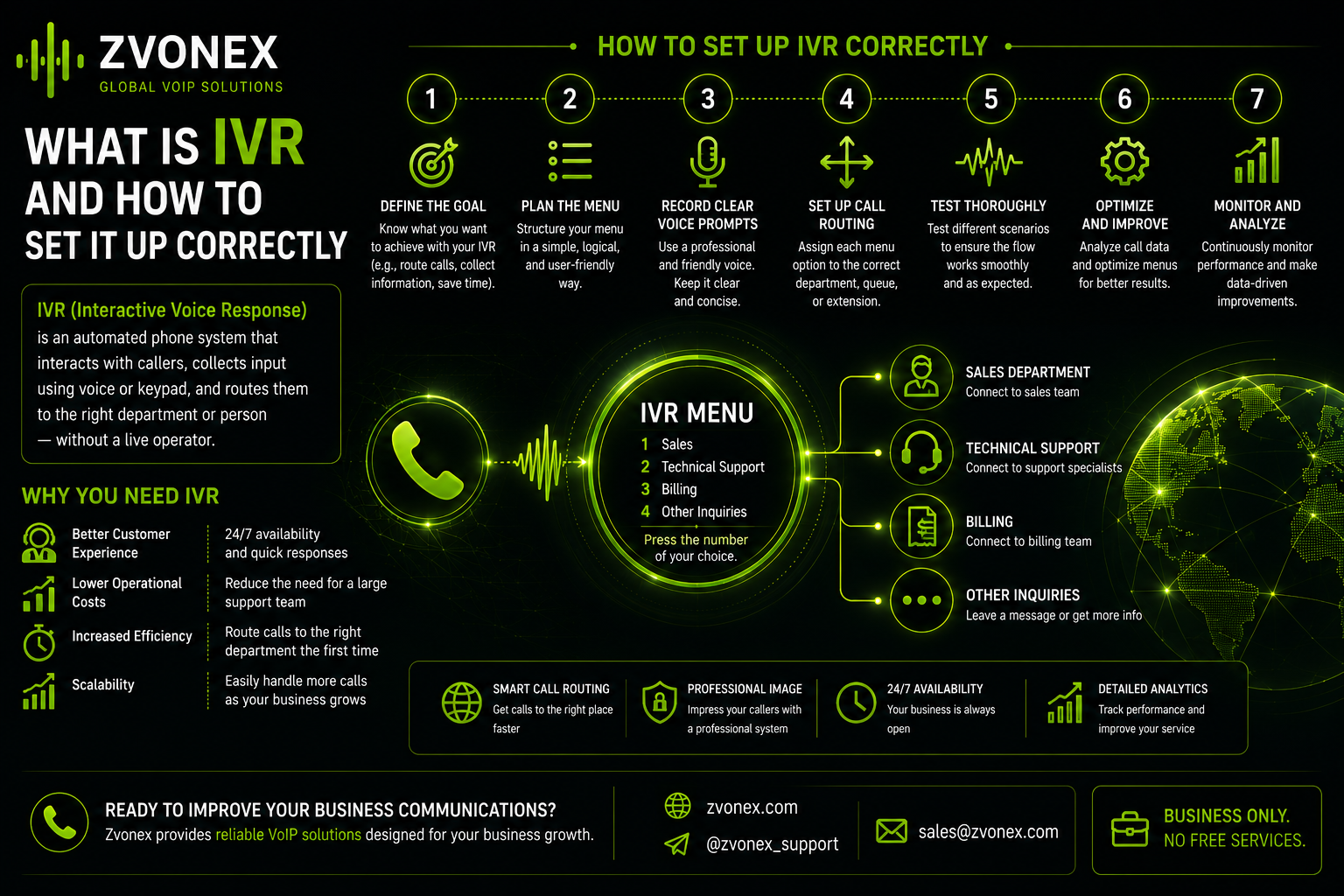
IVR (Interactive Voice Response) is the automated menu system callers hear when they dial your number. «Press 1 for sales, press 2 for support.» Done right, it routes callers faster and reduces load on your team. Done wrong, it drives customers to hang up.
Here’s what separates a good IVR from a frustrating one.
Keep it short. If your menu has more than 4 options, callers stop listening. Two levels maximum — main menu and one submenu. More than that and people press 0 repeatedly hoping for a human.
Put the most common option first. Look at your call data — what do 60% of callers want? That’s option 1. Not «press 9 for our most popular service» buried at the end.
Always offer a way out. A caller who can’t reach a human will not call back. Give them an option to leave a voicemail or request a callback.
Test it as a customer. Call your own number. Time how long it takes to reach the right person. If it takes more than 45 seconds — your IVR is too complex.
Update it when things change. Seasonal hours, new departments, promotional messages — IVR that references old information destroys trust faster than no IVR at all.
A well-configured IVR handles 30–40% of inbound volume without involving an agent. That’s time your team gets back for complex conversations.
→ zvonex.com
📩 t.me/zvonex_support
#IVR #VoIP #CallCenter #BusinessPhone #CloudPBX #CustomerService #Zvonex #Automation