

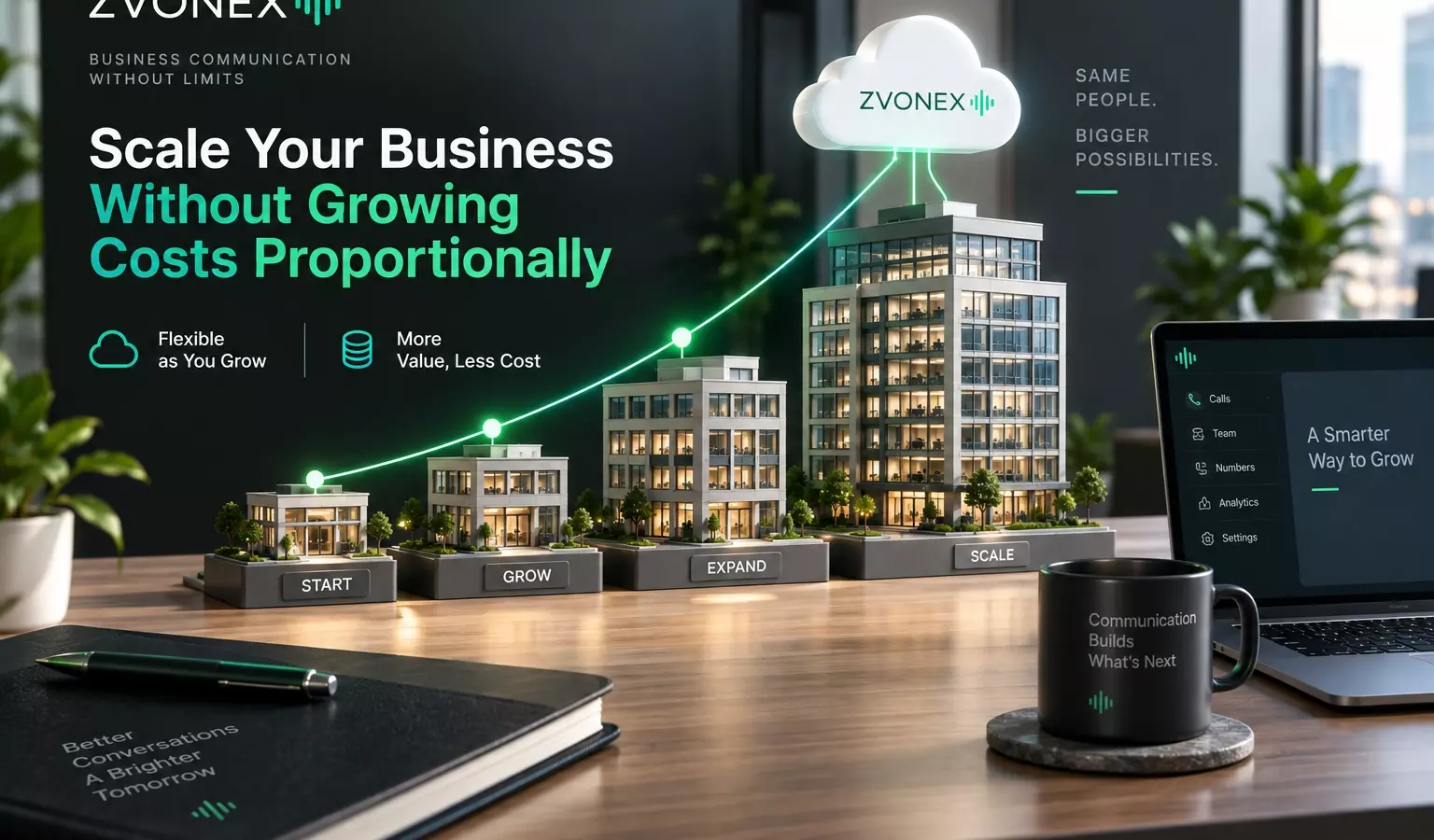
The traditional relationship between business growth and communication cost was linear: more people, more lines, more infrastructure spend. VoIP breaks that relationship.
What changes at different growth stages:
10 to 50 people: The cost difference is dramatic. A 50-seat traditional PBX costs $30,000–60,000 in hardware alone. A 50-seat cloud VoIP setup costs $500–2,000/month with no hardware purchase.
50 to 200 people: At this stage, the flexibility advantage dominates. Acquisitions, new offices, and remote teams can be integrated into one phone system within hours. Traditional systems require weeks of physical installation for each new location.
Entering new markets: A virtual number in a new country costs $10–50/month. Setting up a local DDI with a traditional telecom provider in a foreign country requires local legal entities and months of lead time.
The infrastructure ceiling:
Traditional telephony has a physical ceiling — the maximum is determined by what you've installed. Cloud VoIP scales on demand. If a campaign drives 3x your normal call volume tomorrow, your system handles it. You add capacity in minutes, not months.
The accounting difference:
Traditional PBX is CapEx (capital expenditure). It sits on the balance sheet, depreciates, and requires reinvestment cycles. Cloud VoIP is OpEx (operating expenditure). Predictable monthly cost, adjustable as the business changes.
For a growth-stage business, this matters. Capital stays available for product and market investment, not infrastructure.
→ zvonex.com
📩 t.me/zvonex_support