

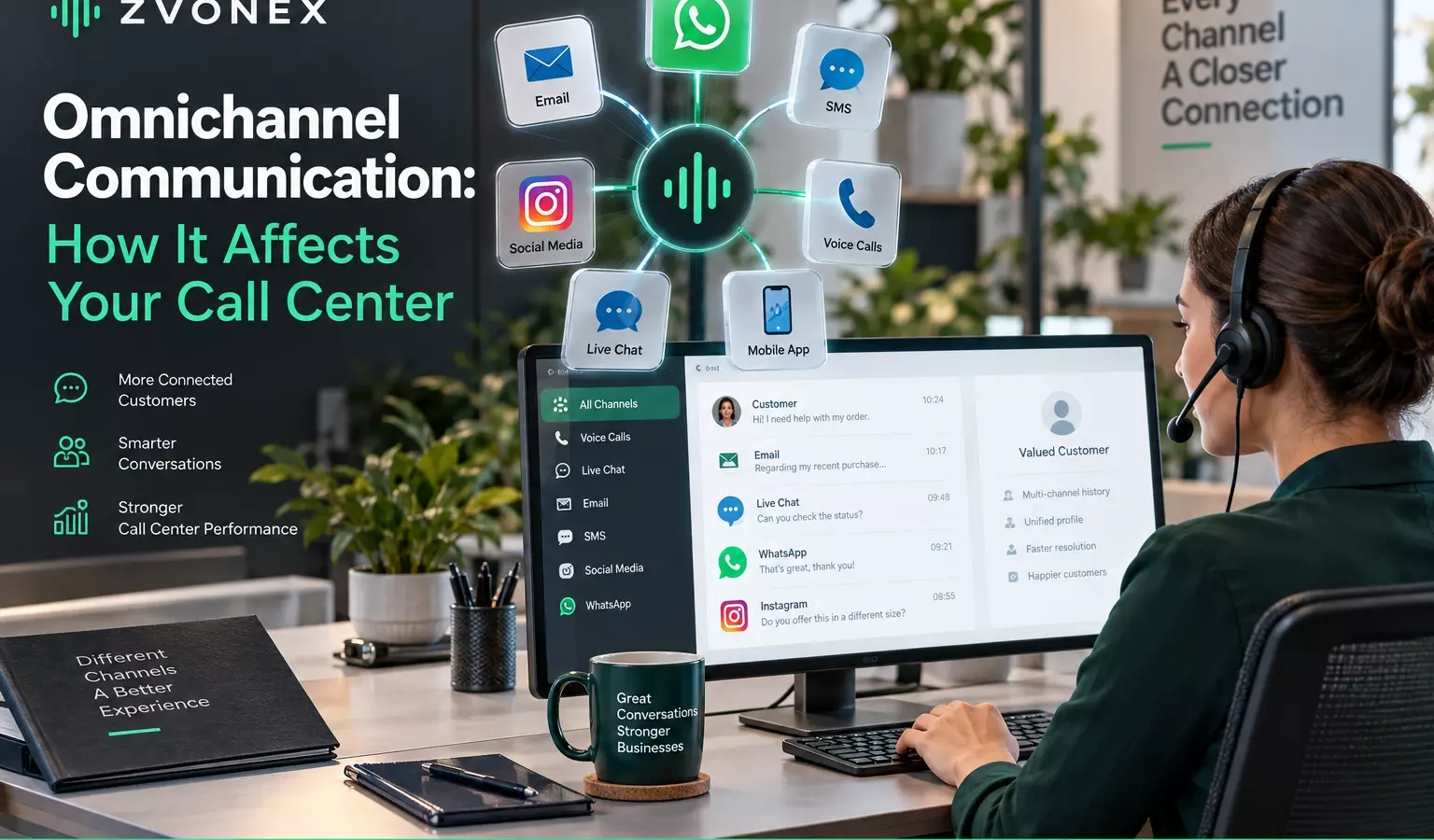
Customers no longer choose a single channel. They start on chat, escalate to email, then call when neither resolves the issue. If your call center operates in isolation from other channels, every phone interaction starts from zero — and that's expensive.
What omnichannel actually means in practice:
A customer who started a chat conversation yesterday should be able to call today and have the agent see that chat history before saying hello. This isn't future technology — it's available now through CRM integration. What requires investment is organizational will, not technical capability.
The call center's role in an omnichannel model:
Voice becomes the resolution channel, not the first contact channel. Customers who call have usually already tried self-service or digital channels and escalated. This means callers are typically higher-intent and higher-frustration simultaneously.
What this changes about how you staff and train:
Agents need context skills, not just call skills. Reading a previous chat thread before answering requires training on empathy and continuity, not just call scripting.
Metrics need to span channels. A call FCR metric is misleading if the same issue generated a chat, an email, and then the call. True resolution rate counts the issue, not the interaction.
The infrastructure requirement:
A phone system that integrates with your chat, email, and social platforms. Not necessarily one platform for everything — but data that flows between them. VoIP with open API access makes this achievable for most mid-size businesses without enterprise-scale investment.
→ zvonex.com
📩 t.me/zvonex_support