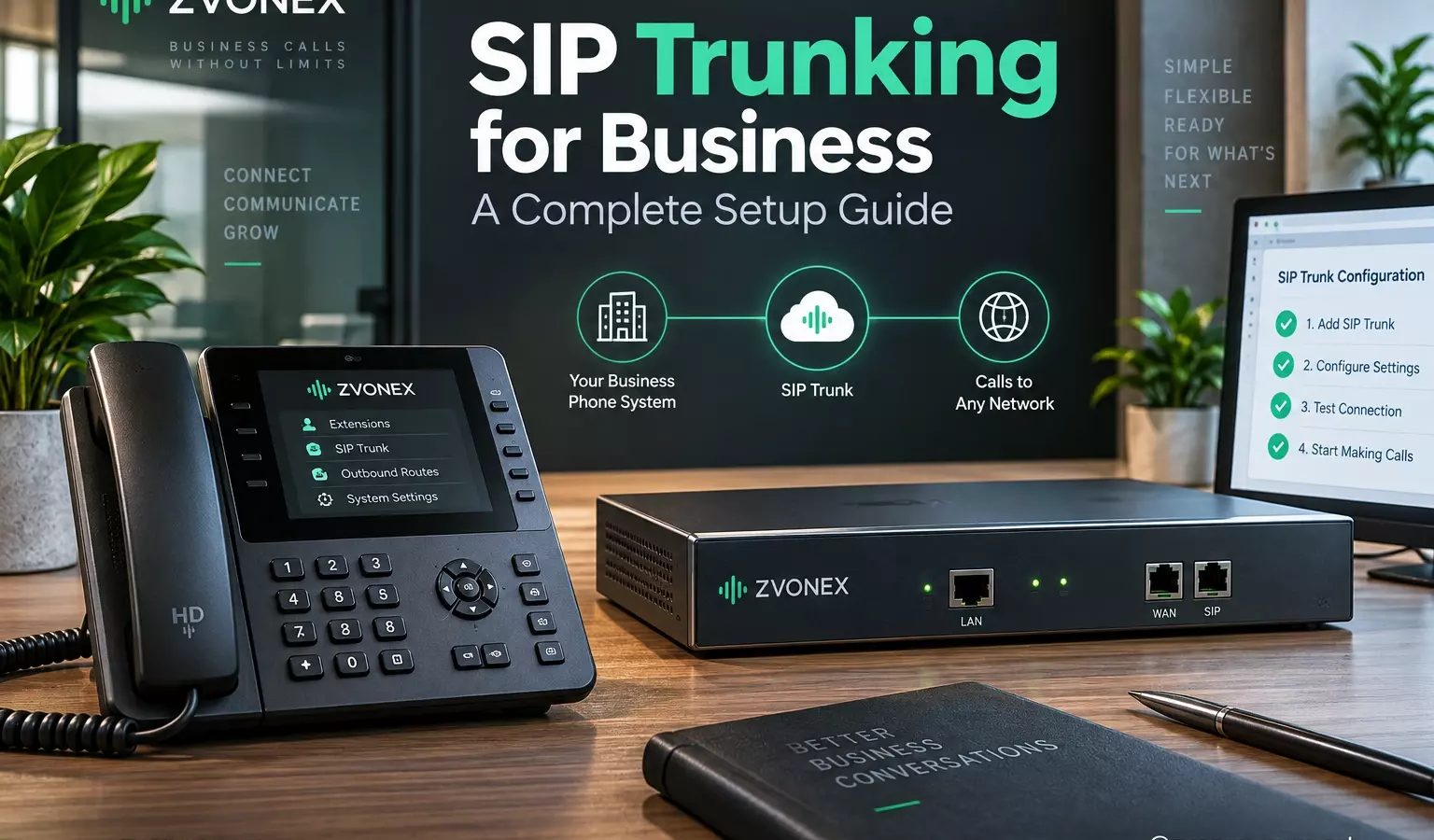
SIP Trunking for Business: A Complete Setup Guide is best handled through clear requirements, measurements, and staged validation rather than a single universal setting. This guide provides a practical method for organizations that need reliable communications without unnecessary complexity.
What you need to understand
SIP trunking replaces physical phone lines with an IP connection between a business PBX and a carrier. Results depend on more than pricing: network design, routing policy, equipment interoperability, and a tested backup path all matter.
For this topic, separate the business objective from the feature itself. Evaluate the real-world use case for sip trunking for business: a complete setup guide, expected load, network constraints, and the team's ability to support the system after launch.
Before selecting a provider or changing configuration, document the current state: who calls, where calls must go, simultaneous call volume, participating systems, and the maximum acceptable interruption. This map reduces guesswork during implementation.
What to check before implementation
- Pbx, sbc, and codec interoperability.
- Simultaneous call capacity with a practical safety margin.
- Backup carrier, internet circuit, and route.
- Caller id presentation and emergency-calling requirements.
Assign a clear process owner. This person aligns business requirements, accepts test results, and controls changes. When responsibility is shared among a carrier, an integrator, and internal IT, support boundaries should be documented.
A practical implementation plan
- Map the current flow. Record numbers, destinations, business hours, queues, integrations, peak demand, and critical exceptions.
- Define acceptance criteria. Set limits for setup time, voice quality, redundancy behavior, and required reporting.
- Build a pilot. Test with a limited user group and real workflows while preserving the production route.
- Run negative tests. Simulate internet loss, an unavailable node, invalid destinations, fully occupied queues, and integration failures.
- Launch with observation. During the first days, compare technical metrics with user feedback and the change log.
Common mistakes
The most common mistake is treating one successful test call as full acceptance. It does not validate peak capacity, failover, DTMF, recording, reporting, or failure behavior. Another mistake is changing several components simultaneously, which makes root-cause analysis much harder.
Avoid unverified promises about savings or quality. Carrier terms, legal requirements, and feature availability vary by country and number type. Confirm every critical parameter in a contract or technical specification.
How to measure the result
For “SIP Trunking for Business: A Complete Setup Guide,” the baseline should include route availability, ASR, ACD, PDD, SIP failure rates, and RTP quality. Capture the same indicators before the change, one week after launch, and again after one month. Review worst intervals during peak demand, not only averages.
Frequently asked questions
Can this be implemented without interrupting production telephony?
Yes. A safe migration uses a parallel pilot, test numbers, or a restricted user group. Switch production traffic only after acceptance testing and with a documented rollback path.
Is a backup route necessary?
If calls affect revenue, customer support, or contractual obligations, redundancy is necessary. It should include an independent path, current configuration, and regular tests—not merely a second server.
How often should configuration be reviewed?
Review it at least quarterly and after every material change, such as a new office, campaign, integration, carrier, or significant increase in traffic. Validate emergency contacts and procedures more frequently.
Conclusion
SIP Trunking for Business: A Complete Setup Guide requires coordinated work across business, IT, and the communications provider. Begin with measurable requirements, conduct a pilot, test failure scenarios, and scale only after acceptance. This approach reduces downtime risk and produces an outcome the business can manage.
Learn more about ZVONEX solutions: zvonex.com
Telegram channel: @zvonex_voip
Sales manager: @zvonex_official
Email: [email protected]